The Science of Light: From Ancient Reflections to Modern Innovation
February 14, 2025Najlepsze kasyno internetowe PL 2025 — ranking
February 14, 2025Whoa! I clicked an address the other day and got lost in the data — in a good way. My first impression was: clean, fast, and exactly what you want when a transaction is burning a hole in your wallet. Seriously? Yes. Solana’s throughput can be dizzying, and a good explorer keeps you grounded. Initially I thought explorers were all the same, but then I started digging into token holders, NFT histories, and program internals, and that changed everything — actually, wait — let me rephrase that: one small feature can make the whole difference when you’re hunting down a failed mint, tracing a rug, or reconciling token splits.
Here’s the thing. Not all blockchain explorers are created equal. Some feel like clunky archives. Others are slick but shallow. Solscan hits a sweet spot: it gives you both glanceable summaries and the nitty-gritty details when you want them. My instinct said it would be overhyped, but after a few sessions of real troubleshooting (and a couple late-night wallet dives), I leaned on it more than I expected. I’m biased, but when you need an NFT tracker that shows ownership history without making you guess, a tool like this matters.
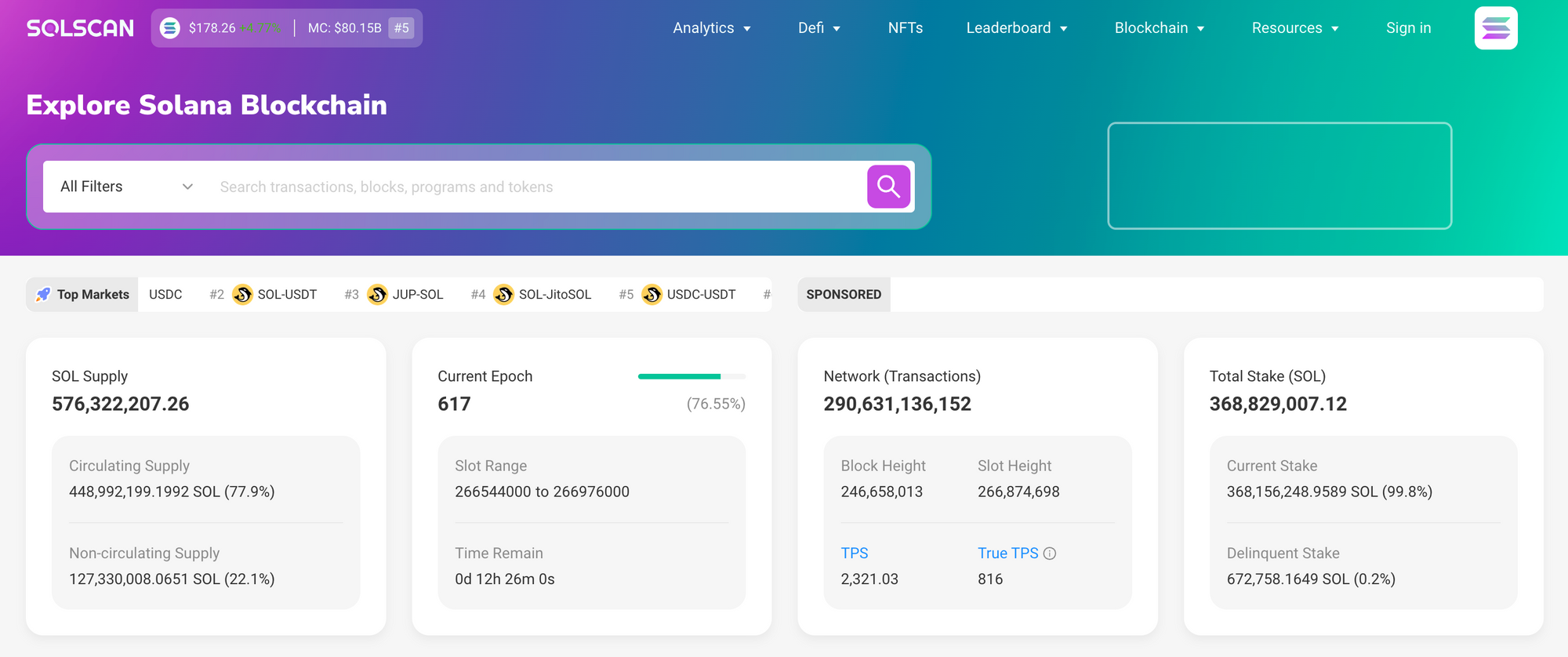
Before we get too deep: if you want to check it out directly, here’s the official link — solscan explorer official site. I use it as a go-to, and many teams I know have it bookmarked. Oh, and by the way… this article is more of a guided walk-through than a dry spec sheet. There’ll be tangents. There’ll be nitpicks. You might even find somethin’ useful for your next mint or audit.
What makes a blockchain explorer worth your time?
Short answer: speed, clarity, and reliable indexing. Medium answer: a good explorer helps with debugging, audit trails, and user trust. Longer thought: when network behavior gets strange — for example, when confirmations hang or programs return opaque errors — the explorer is the single point where on-chain truth, human-readable context, and developer-focused metadata intersect, and that intersection determines whether you can resolve issues quickly or lose hours chasing false leads.
Solscan does a number of things very well. It surfaces transaction signatures with full logs. It shows token transfers grouped sensibly. It has dedicated NFT views that list metadata, creators, and owner change history — which is crucial when you want to determine provenance or spot duplicated mints. It offers token holder lists and distribution charts that are useful for tokenomics checks. And for node operators or validators, the block and slot pages reveal scheduling details that can hint at performance problems.
Deep dive: NFT tracking that actually helps
Okay, so check this out — NFT trackers often promise provenance, but they hide the steps. Solscan lays the steps out. You can click a mint address and see the initial mint transaction, the mint authority, metadata link, and subsequent ownership transfers. If a collection uses Metaplex or a Candy Machine mint, the explorer frequently surfaces that info so you can tell whether a token is part of an official drop or a mirror mint.
Step-by-step, the workflow I use: search by token mint → inspect metadata link (remember to verify off-chain metadata separately) → review “Owners” and transaction history → check creator royalties and verify collection verification flags where available. That process reduces guesswork. Something felt off about a few tokens I inspected once — duplicate metadata URLs, weird royalty splits — and because the history was visible I could trace the split across transfers and figure out who introduced it.
One caveat: on-chain metadata can point to off-chain assets. If that JSON disappears or is replaced, the on-chain record still shows the mint history, but the artwork might change. Always archive the metadata if you care about provenance. Seriously. Back it up.
Tools developers appreciate
For devs, the obvious win is that Solscan exposes the program call data and instruction breakdowns. That matters when you need to debug why a program returned an error or why funds moved unexpectedly. You can decode instruction layouts, follow CPI (cross-program invocation) traces, and see which accounts were involved. These are not just nice-to-haves — they accelerate incident response.
There’s also a public API and export features (CSV/JSON) for analytics, which helps if you’re building dashboards or doing token distribution analysis. I won’t promise it’s perfect for every edge-case, but it beats scraping raw RPC logs. On one hand the explorer takes care of indexing and presentation; on the other hand you should still validate critical findings against a trusted RPC node or your own indexer. Don’t just accept a single source without a sanity check.
Practical tips and workflows
When you’re troubleshooting a failed mint or tracing a takedown: copy the transaction signature, paste it into the search bar, and then read the instruction logs top to bottom. Use the filters on token transfer pages to isolate SOL vs SPL movements. For NFTs, sort ownership by most recent and scan for wash trades or rapid flips — those patterns often show up as clustered transfers within a few slots.
If you’re managing a project, export the list of holders before a snapshot. Make sure to recheck token decimals and frozen/mint-authority flags. A tiny mistake there can cause airdrop headaches or snapshot errors. (I’ve seen teams forget decimals and then wonder why balances looked wrong… yep, it’s a basic trap but it still happens.)
For collectors: look at the “Verified” indicators and creator addresses. If a collection doesn’t have a verification flag, or if the creators list looks messy, that’s a red flag. On the flip side, some legitimate projects use multisig minting or secondary program logic that looks complex; complexity isn’t necessarily fraud, but it does mean you should ask questions.
Security, privacy, and limitations
Let’s be blunt: explorers are mirrors, not vaults. They show on-chain truth, and that truth is public. If you expose a hot wallet address, Solscan will show everything tied to it. My instinct said to use view-only or derived addresses when sharing links. Something else to keep in mind — fast networks like Solana produce many micro-transactions; explorers may lag slightly behind peak load, and sometimes indexers skip ephemeral state that a full archival node would have. So, for forensic-level work, combine Solscan with your own node logs.
Privacy-wise, Solscan doesn’t deanonymize beyond what’s on-chain, but linking on-chain addresses to real-world identities is a separate problem. Use best practices: hardware wallets, unique addresses per service, and cautious signatures for approvals. I’m not 100% sure about every third-party integration, so read the permissions before connecting wallets to any site — yes, even to tools you trust.
Stuff that bugs me (and why it matters)
Here’s what bugs me about explorers in general: inconsistent metadata rendering, sometimes confusing UI states, and the occasional mismatch between on-site labels and raw on-chain data. Solscan handles most cases well but it’s not immune. You might see truncated names or missing off-chain assets, and when that happens you have to dig into the raw JSON. It slows you down, and when you’re racing against a mint or trying to stop a scam, seconds count.
Also, double-check token symbols and decimals — they can be spoofed. The UI might show “SOL” next to a completely different token if a project reuses a name. On one hand the explorer gives you tools to verify, though actually verifying sometimes requires extra manual checks (like cross-referencing mint addresses or looking at contract code). On the whole, the tool points you in the right direction; it doesn’t absolve you from verification.
FAQ
How do I find the original mint transaction for an NFT?
Search the token mint address, then open the transaction list and look for the earliest mint event. The explorer typically annotates mint transactions and links to the program (often Metaplex). If the off-chain metadata URL is present, record it for backup — sometimes the metadata host goes offline later.
Can I rely on Solscan for forensic audits?
Yes, as a primary interface it’s excellent for initial audits and incident triage. For a full forensic audit you should combine Solscan with archival RPC data, node logs, and, where possible, on-chain program bytecode verification. Use multiple sources when the stakes are high.
Does Solscan support developer exports and APIs?
It does offer APIs and exportable data (CSV/JSON) that many analytics teams use. For heavy automation, check rate limits and API terms, and consider running your own indexer for complete control.
So yeah — if you’re on Solana regularly, bookmark it. It’s not magical, but it turns a messy chase into a manageable workflow. On the emotional arc: I started curious, got impressed, then mildly frustrated by edge cases, and ended up cautiously optimistic. There’s still room for improvement, though (minor annoyances remain). In practice, Solscan reduces friction when speed matters and gives you enough depth when you need to prove a claim or debug a program. I keep going back to it, and if that tells you anything: it’s earned a place in my toolkit.