How to Play Slot at Online Casinos
May 28, 2025Alles über die Turniere bei allyspin casino
May 29, 2025Okay, so check this out—
I started using browser wallets a few years ago and I was skeptical at first.
They felt clunky and risky, and my instinct said to be careful.
Initially I thought that all extension wallets were roughly the same, just different skins over the same fragile key storage model, but then I dug into how modern wallets like Rabby separate permissions and sign flows, and that changed my view.
It wasn’t an overnight switch, though—I tried things, broke things, learned.
Whoa, that’s wild.
My gut kept whispering that the UX mattered more than the headline features.
So I began mapping my daily flows and the common friction points that cost me time and money.
On one hand I wanted convenience, though actually I wanted safety first, and that tension drove most of my experiments until I found clearer trade-offs between permission granularity and usability.
That process felt messy, and I made a few dumb mistakes along the way.
Here’s the thing.
I tested how wallets ask for approvals when connecting to sites and how they request signatures for each transaction.
Most of them batch approvals and ask for broad allowances that are hard to reason about quickly.
At first I thought approving a big allowance was fine for convenience, but then I realized that the risk surface expands quickly if a site is compromised or if you click the wrong thing; that realization changed how I now manage token approvals and spending limits.
I started to adopt a stricter habit of limiting allowances to what I needed per session.
Really? Yes, really.
Rabby’s approach to isolation and permission prompts actually nudged me into safer patterns without constant friction.
The UI shows approvals in a way that makes it easier to revoke or lower allowances before they’re exploited.
I should note—initially I mistrusted any wallet that added layers of prompts, because extra clicks often mean people ignore them, though Rabby designs those prompts so they convey meaning rather than just be noise.
That design choice alone saved me from a sloppy approval once.
Hmm… somethin’ felt off at first.
I remember thinking that extensions were inherently unsafe because they live in the browser context.
Then I learned how some wallets compartmentalize sites and restrict which pages can trigger signing modals, which reduces accidental approvals.
Actually, wait—let me rephrase that: Rabby doesn’t make your browser magically safe, but it reduces the attack surface by separating domain approvals and showing contextual signing details right before you confirm, which matters a lot when gas and slippage are involved.
That clarity helps with fast decision-making under stress.
Wow, that’s useful.
One small feature I love is the transaction management timeline that surfaces pending, failed, and replaced transactions.
It sounds trivial, but that visibility stopped me from resubmitting confusing duplicate transactions late at night.
Often I rushed to bump gas and accidentally send a second transaction, and the timeline prevented that by making nonce and replacement actions explicit, which took a bit of learning but prevented losses.
I’m biased, sure, but that part really bugs me when other wallets hide these details.
Okay, quick aside.
Rabby also integrates contract interaction previews in certain flows so you can see method names and parameters before you sign.
Reading raw calldata is terrible, of course, so Rabby’s UI translates some of that into readable actions which reduces cognitive load.
On the balance between security and usability, those readable previews tilt the scale toward safer defaults without forcing expert-level knowledge on every user.
That said, it’s not perfect for every contract yet.
Here’s the thing.
I use multiple networks and several accounts, and managing that without errors is hard.
Rabby lets me group accounts, pin frequently used chains, and switch contexts quickly so I don’t forget which key I used for a high-value transfer.
Before, I mixed testnet tokens with mainnet flows and nearly signed something with the wrong account, but clearer context labels and pinned profiles prevented that recurring problem.
Small UX choices add up to big safety wins.
Really—this matters.
Privacy is another angle; some extensions broadcast too much information to the page layer.
Rabby conservatively scopes what pages can query and reduces fingerprinting vectors by minimizing unnecessary data exposure.
On occasion I still see pages trying to nudge additional metadata out of the extension, and I’m not 100% sure every wallet will resist, though Rabby’s team seems attentive to these threats.
I remain cautious, but encouraged.
Whoa, unexpected, but welcome.
One feature that surprised me was multi-signature and hardware wallet integration that feels less clunky than you’d expect in a browser extension.
Pairing a hardware key used to be a multi-step pain, but Rabby’s flow made it straightforward for daily confirmations while keeping keys cold for big moves.
Initially I thought hardware keys would be overkill for small DeFi plays, but after a near-miss on a large swap I moved my high-value positions behind a hardware-backed account and breathed easier.
That personal rule saved me from a late-night panic.
Check this out—
I won’t pretend Rabby is flawless or that it removes the need for vigilance.
There are edge cases with exotic contracts and chain-specific quirks where manual review is still necessary.
On one hand, Rabby’s tooling automates clarity; though, on the other hand, no tool replaces an informed, cautious user who verifies contract addresses and token details before approving interaction.
So yes, you still need to pay attention.
Okay, so a few practical tips.
Use account segregation: one account for small, experimental DeFi plays and another for long-term holdings.
Enable hardware confirmations for large withdrawals and high-risk approvals whenever possible.
Also, periodically review allowances and revoke anything you don’t recognize, because automated tooling won’t always catch crafty phishing or compromised dApps that request sweeping permissions.
Do that and you’ll sleep better—trust me.
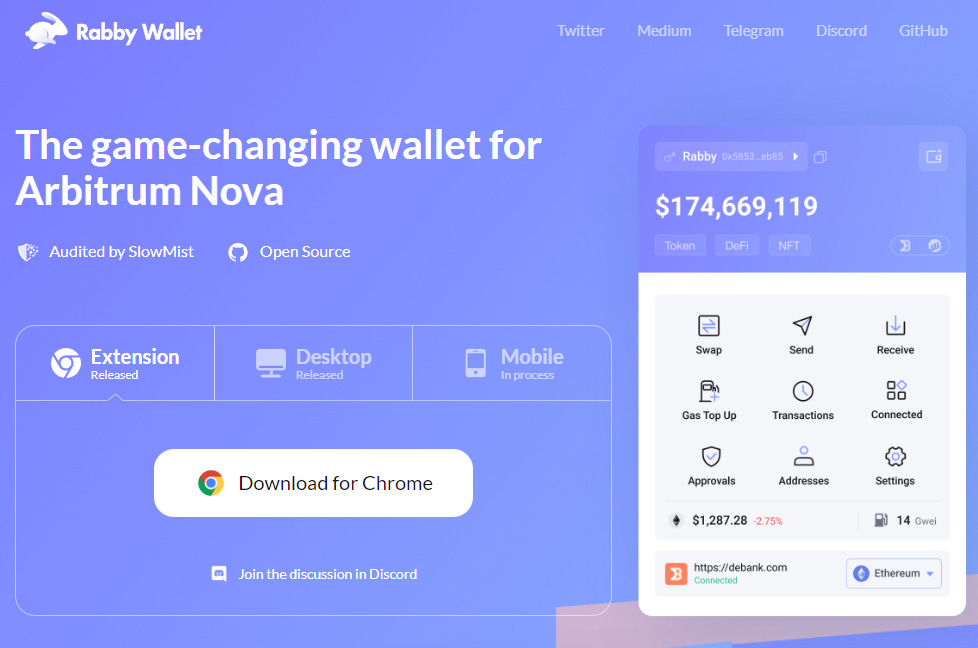
How to get started safely
If you want to test it out, start with the official installer link for a verified build: rabby wallet download and then try small transactions on a testnet or with tiny amounts first.
Seriously, test with low value before trusting a new workflow.
Backup your seed phrase securely and treat it like cash—no cloud notes, no screenshots.
On your first week, practice revoking allowances, pinning accounts, and simulating recovery so you know your process if something goes sideways.
That rehearsal reduces panic and mistakes later.
FAQ
Is a browser extension wallet safe?
Short answer: relatively, if you follow best practices like using hardware keys for big moves, limiting allowances, and keeping a dedicated account for risky activity; extensions increase convenience but also require stricter habits.
Can I use Rabby with hardware wallets?
Yes—Rabby supports hardware integrations, which lets you keep keys cold while using the extension for signing smaller, day-to-day interactions.
What should I do if I spot a suspicious approval?
Immediately revoke the allowance, move unaffected funds to a secure account, and if a hardware key was used, review device logs and consider a device reset for high-risk cases.